
How to Search Lafayette County Civil Dockets
Case.net is Missouri's public entry point for Lafayette County civil docket information. It draws from the statewide Judicial Information System. Locally, circuit civil cases sit in Lafayette County Division One, while associate and small-claims work goes to Lafayette County Division Three. A case number is the cleanest identifier. If you search by name only, slow down. Read the header. Check the division, civil category, caption, filing date, and status before deciding you have the right Lafayette County case.
The portal is not the filing counter, though. The Lafayette County Circuit Clerk answers records questions at 660-259-6101, helps visitors at Lafayette County Lafayette Hall, and can point you to the right division. Email works for questions but not for filing, since the clerk treats email attachments as invalid filings. When a public document does not appear online, ask about the courthouse public terminal instead of assuming nothing exists.
- Open Case.net and choose the Lafayette County search route that fits the information available, such as a party name or case number.
- Limit the result to Lafayette County and confirm whether the Lafayette County header carries the civil category CV.
- Open the matching Lafayette County case and read entries in date order, beginning with the caption, division, filing date, and current status.
- Check Lafayette County notices of setting, motions, orders, and any judgment or dismissal entry. A title for a filing is not the same as its outcome.
- For a certified Lafayette County copy, historical search, or unclear result, contact the Lafayette County Circuit Clerk and state the division, date range, case number or caption, and record needed.
Lafayette County Civil Case Search Paths
Case.net is the statewide layer. Lafayette County staff work in JIS, the underlying court-record system. An online result can seem thin. Your request may also target a specific records group. The county's record-search form is a separate path for both. Its checkboxes split Circuit Civil Records Only from Associate Civil Records Only, with further options for criminal, traffic, other, and all records. The split matters. A Lafayette County request that just says civil may not reach the division holding the record.
Narrower searches work better. The form asks for the judge or division, case number, party name, subject name, and search-from and search-to dates. The form also flags what exists where. JIS records run from 2002 to the present. JIX circuit material covers 1994 to 2002. Scanned records and associate civil index cards are flagged too. Older Lafayette County civil records may need direct clerk help rather than a modern Case.net lookup. The county's record-search request form is the documented starting point for that index search.
A public terminal is the practical fallback. Case.net may name a public eCase document but will not show it to a remote, unauthenticated user.
What a Lafayette County Civil Docket Shows
Think of a Lafayette County civil docket as a timeline, not a verdict on who is right. The header can carry a civil category, caption or style, division, filing date, status, parties, and lawyer or self-represented indicators where public. The entries then log procedural events one after another. Read the whole sequence. That is how you tell an opening claim apart from a later order, judgment, dismissal, or satisfaction. Each means something different in the court record.
| Case number | The court identifier, commonly paired with the civil category CV; confirm Lafayette County and division before relying on it. |
|---|---|
| Case header | Lafayette County case style, filing date, court or division, and current status that identify the record’s basic structure. |
| Opening entries | Petition or complaint, filing processing, and a summons or service request. An opening filing is not a judgment. |
| Responses and motions | Answers, counterclaims, motions, replies, and related Lafayette County court action as they are entered. |
| Settings and orders | Notices of hearing, case-management or settlement events, continuances, trial settings, orders, dismissal, or judgment. |
| Enforcement or appeal | Judgment memo, execution, garnishment, satisfaction, or an appeal-related entry when those steps are filed. |
Lafayette County Civil Claim Limits
The Lafayette County clerk's published guidance draws a money line between small claims and other associate civil matters. Small claims stop at $5,000. Associate civil cases stop at $25,000. Those caps point you toward the right path, but the docket itself still deserves a look for its division, category, and case-specific filings. Lafayette County Division One is the circuit division. Lafayette County Division Three handles associate and small-claims work under the county's division map.
| Lafayette County civil path | Published local limit or role |
|---|---|
| Lafayette County small claims, Division Three | Lafayette County claims capped at $5,000 |
| Lafayette County associate civil, Division Three | Lafayette County cases capped at $25,000 |
| Lafayette County circuit civil, Division One | Circuit-level civil cases under the Lafayette County division structure |
The county's civil forms page lists the official routes for local civil, execution, and garnishment forms.
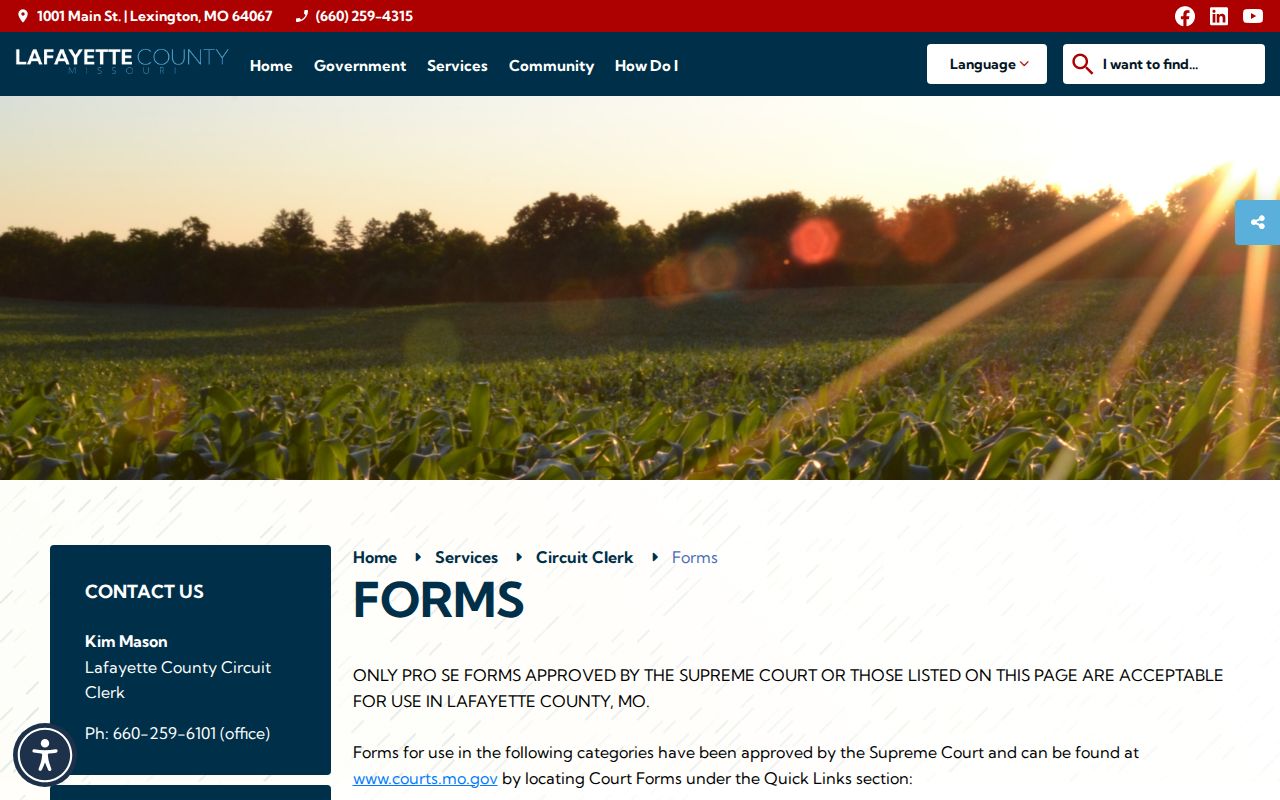
Named form routes help you name the procedural document you want. That keeps a docket search from drifting into a request for private financial details.
Types of Lafayette County Civil Docket Cases
Civil dockets in Lafayette County cover more than one kind of dispute. The county's fee and forms materials sort cases into circuit civil, domestic and related matters, associate civil, small claims, foreign judgments, judgment-debtor examinations, and enforcement work. Some family, juvenile, or protected matters carry access limits. So a civil label alone does not guarantee every document or name is public. Check the category before assuming full access to the court record.
- Lafayette County circuit civil cases in Division One.
- Lafayette County associate civil cases other than small claims in Division Three.
- Lafayette County small-claims matters in Division Three.
- Lafayette County domestic, modification, paternity, and domestic-contempt filings.
- Lafayette County judgment enforcement entries, including execution, garnishment, and satisfaction filings.
A complaint or petition starts the claim. An answer or motion responds to it. A judgment is the court's formal result, while a satisfaction is a later sign that the judgment has been addressed, so treat these terms as distinct docket outcomes rather than interchangeable ones.
Lafayette County Civil Filing Fees
The Lafayette County Circuit Clerk publishes a payment page. It breaks civil filing fees into categories. The amount often depends on the filing method, and the county draws a line between pro se and e-filed entries where one exists. Service charges in Lafayette County sit outside the filing fee itself. None of these figures promise what a case will cost in the end. They only cover the route a filing takes. Anyone submitting papers should confirm the current amount with the Lafayette County clerk first, since published figures can lag behind what the office collects at the counter.
| Published filing category | Amount listed by the county |
|---|---|
| Original circuit civil | $150.50 pro se; $100.50 e-filed |
| Domestic, modification, paternity, or domestic contempt | $150.50 pro se; $102.50 e-filed |
| Associate civil other than small claims | $100 pro se; $48.50 e-filed |
| Small claims | $35.50 plus service, or $35.50 e-filed |
| Appeal or trial de novo | $70 appeal; $45 trial de novo |
| Other listed civil entries | $100.50 foreign judgment; $150.50 judgment-debtor examination |
The county payment and deposit information is where the clerk publishes the local fee amounts by civil category.
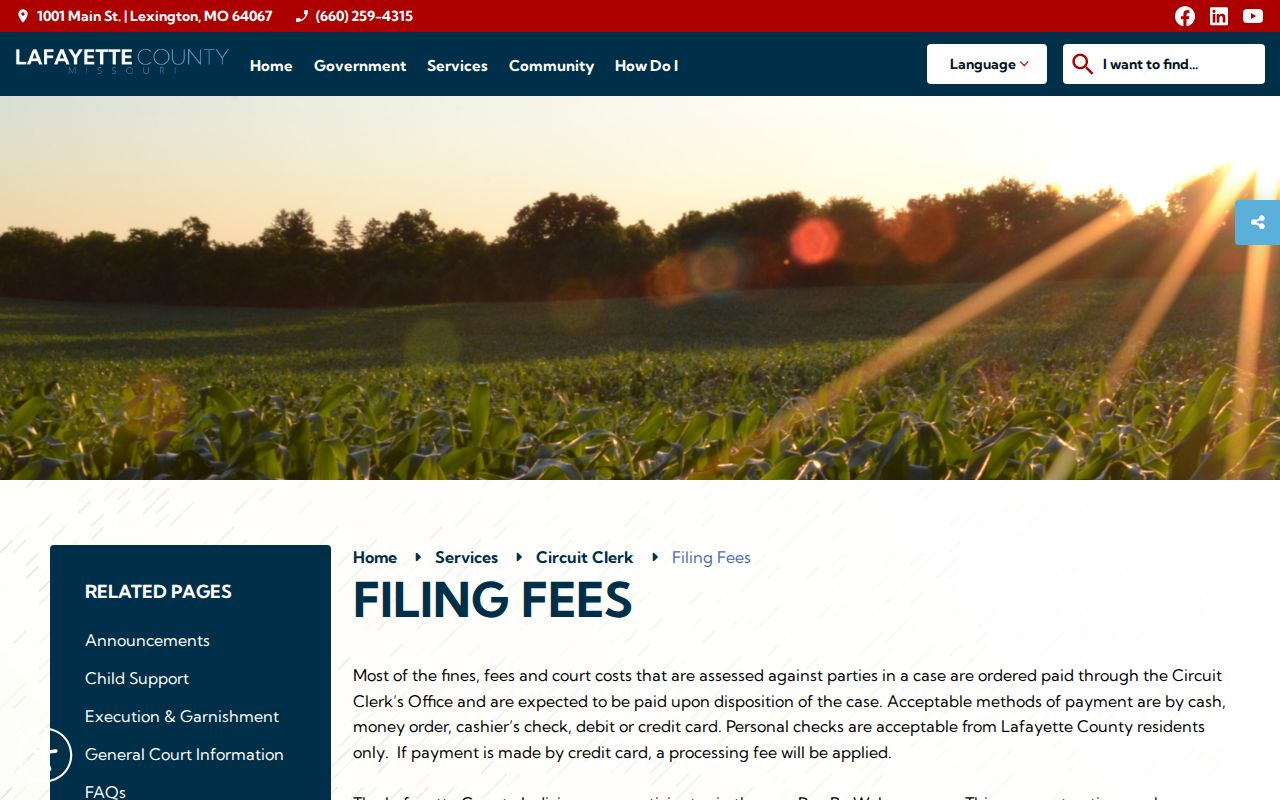
The fee categories below describe filing routes for a Lafayette County civil case, not its eventual result.
Lafayette County Civil Docket Settings
A Lafayette County civil docket gathers the entries that shape a case: notices of setting, case-management and settlement conferences, trial settings, continuances, and orders. Under the Fifteenth Circuit local rules, civil and criminal cases are set for trial activity that day. They appear together on a trial docket. What the docket shows is what has been set or entered, no more. It does not lock in a hearing. Lafayette County cases get continued and reset all the time. Sometimes that happens after you have already pulled the entry. For a firm answer on date, time, courtroom, and status, run the scheduled-hearings search in Case.net. Then confirm anything unclear or changed with the clerk. The Lafayette County court calendar walks through the local calendar search and separates general court sessions from a case-specific setting. Trust the case notice and the clerk, not an old docket view.
Lafayette County Civil Records Before Case.net
Case.net reaches back only so far. The Lafayette County search form spells out the layers underneath. JIS records run from 2002 to the present, and JIX circuit records cover 1994 through 2002. Scanned files and index cards hold associate civil work. A case older than that span needs a different touch. Give the Lafayette County clerk a tight date range plus the best caption or case number you have. The office can then tell whether JIS, JIX, a scan, or an index card holds the record. Court-file searches carry their own costs: 25 cents per copy page and $2.50 for certification. That fee structure sits apart from the county's general Sunshine-request framework. That framework covers broader county records, and it can add staff or duplication charges. Name the record you want. Then ask the clerk which route and fee schedule apply before you authorize a large search. The Missouri expungement surcharge statute is the official state source. It governs the surcharge tied to civil docket filings.
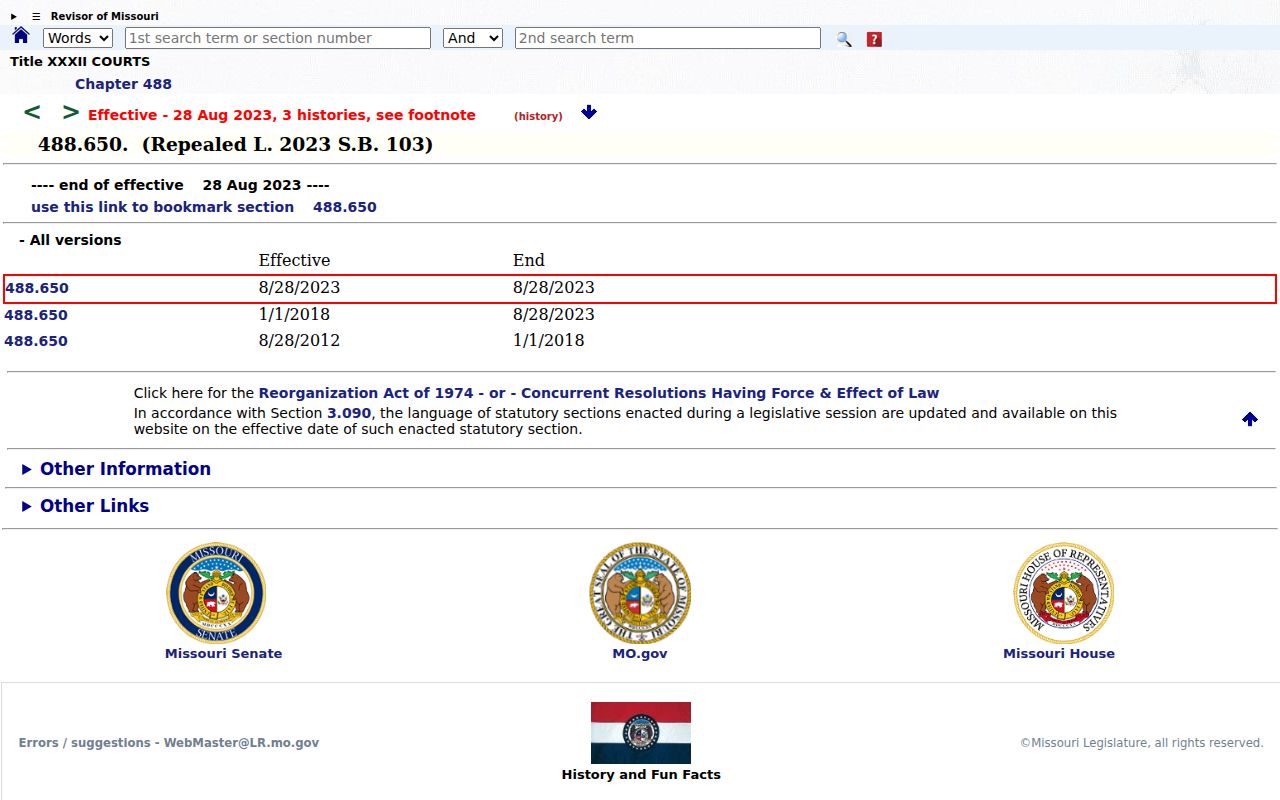
Missouri law treats an expunged record as confidential. A missing public result tells you nothing about whether a proceeding ever existed.
Public Access to Lafayette County Civil Dockets
Missouri opens most court information to the public. Statutory, rule-based, and court-ordered limits stay in force. A Case.net header or docket entry can be public even when the attached document is not. That happens when a secure document carries restricted access. It also happens when a protected name stays out of name searches. Limits also fall on juvenile, abuse, stalking, mental-health, victim, witness, sealed, and expunged material. For a wider county request, use the county's Sunshine request form. Pick Circuit Clerk (Courts) from the department menu. The form asks for first and last name, email, phone, and a description of the request. It also asks for a preferred contact method. The delivery choices are courthouse inspection, electronic copies, paper copies, or no preference. Spell out the civil division, the date range, and the record you need. No special format is required. When a record is on hand, the county generally responds by the end of the third business day.
Missouri access rules:
RSMo 610.011 states Missouri’s policy favoring open public records while allowing strictly construed exceptions.
Missouri Court Operating Rule 2 governs public access to court records and access equipment.
RSMo 610.140 establishes confidentiality consequences for expunged records.
Lafayette County Civil Judgment Forms
Once a judgment lands, the local forms page lists the tools that follow. These include an execution application and order, a garnishment application and order, garnishee interrogatories, a statement of judgment balance, a judgment memo, and a satisfaction of judgment. Knowing these names helps you read what shows up on a civil docket after judgment. They prove nothing about a balance, a payment status, or any right to a given procedure. For a pro se execution or garnishment, the clerk's published guidance lists a $10 surcharge plus service fees. Treat that as a local procedural amount, distinct from case-specific service costs. When you want a record rather than a new filing, ask whether a plain copy, certified copy, or authentication is required. Case.net can locate civil activity. Yet it does not automatically supply the clerk-certified record another office may demand. Note: A dismissal docket is a procedural warning under the local rules. It is not a sign that a Lafayette County civil case has already been dismissed. The local rules allow dismissal dockets around May 1 or November 1. That applies to domestic civil cases with no activity for 60 days, and to other civil circuit cases idle for six months, unless a satisfactory reason is shown. Watch the actual entries and any notice or order in the case itself.